
 Contact
 Languages
How does RIU Hotels protect children from sexual exploitation through its partnership with ECPAT?
19 February, 2026 Share

Child sexual exploitation is a reality that no one wants to see, but which is very much present in holiday destinations. At RIU, we do not look the other way: we have been working for years to turn our hotels into 100% safe places for children and adolescents through training, protocols, awareness, and plenty of common sense.
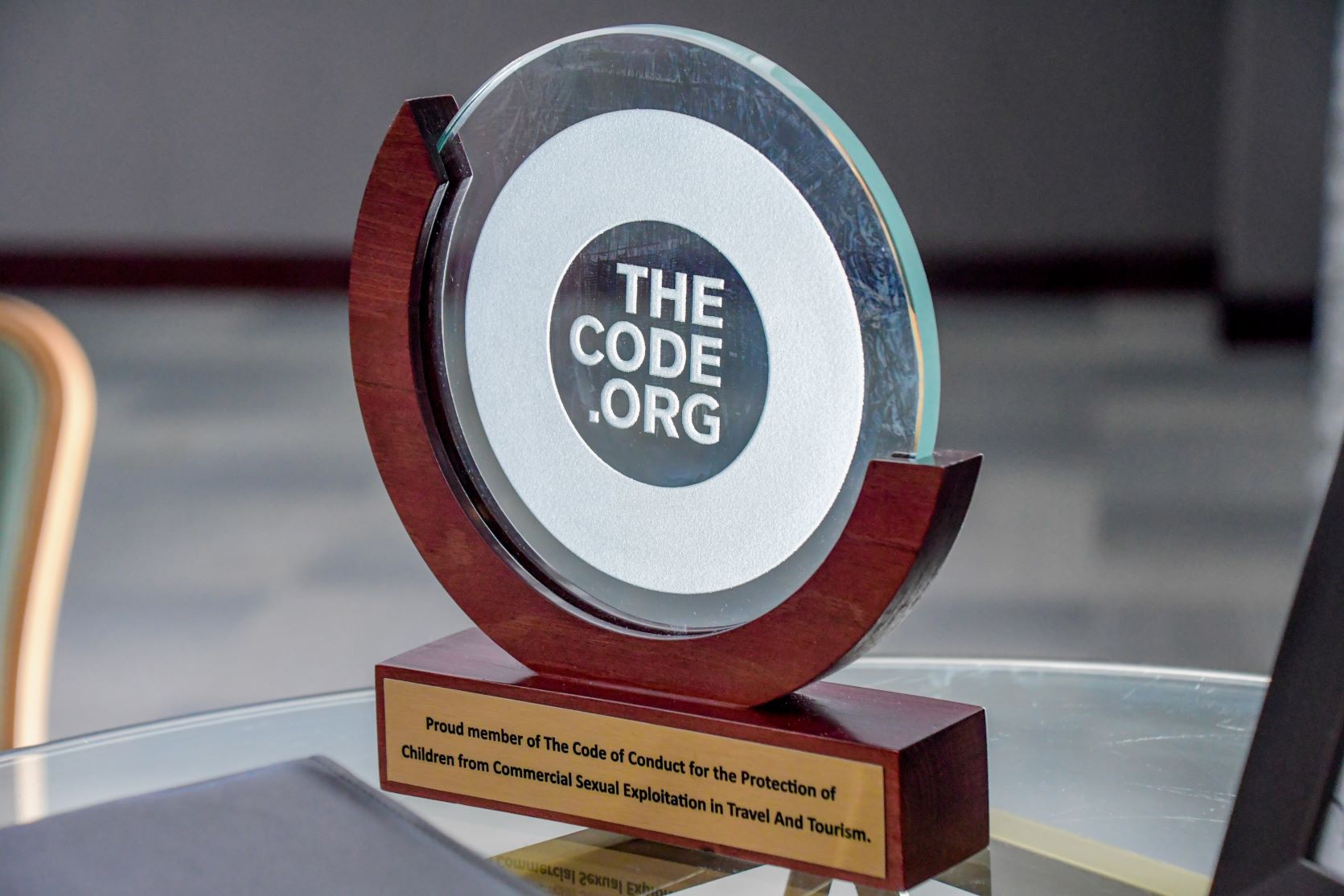
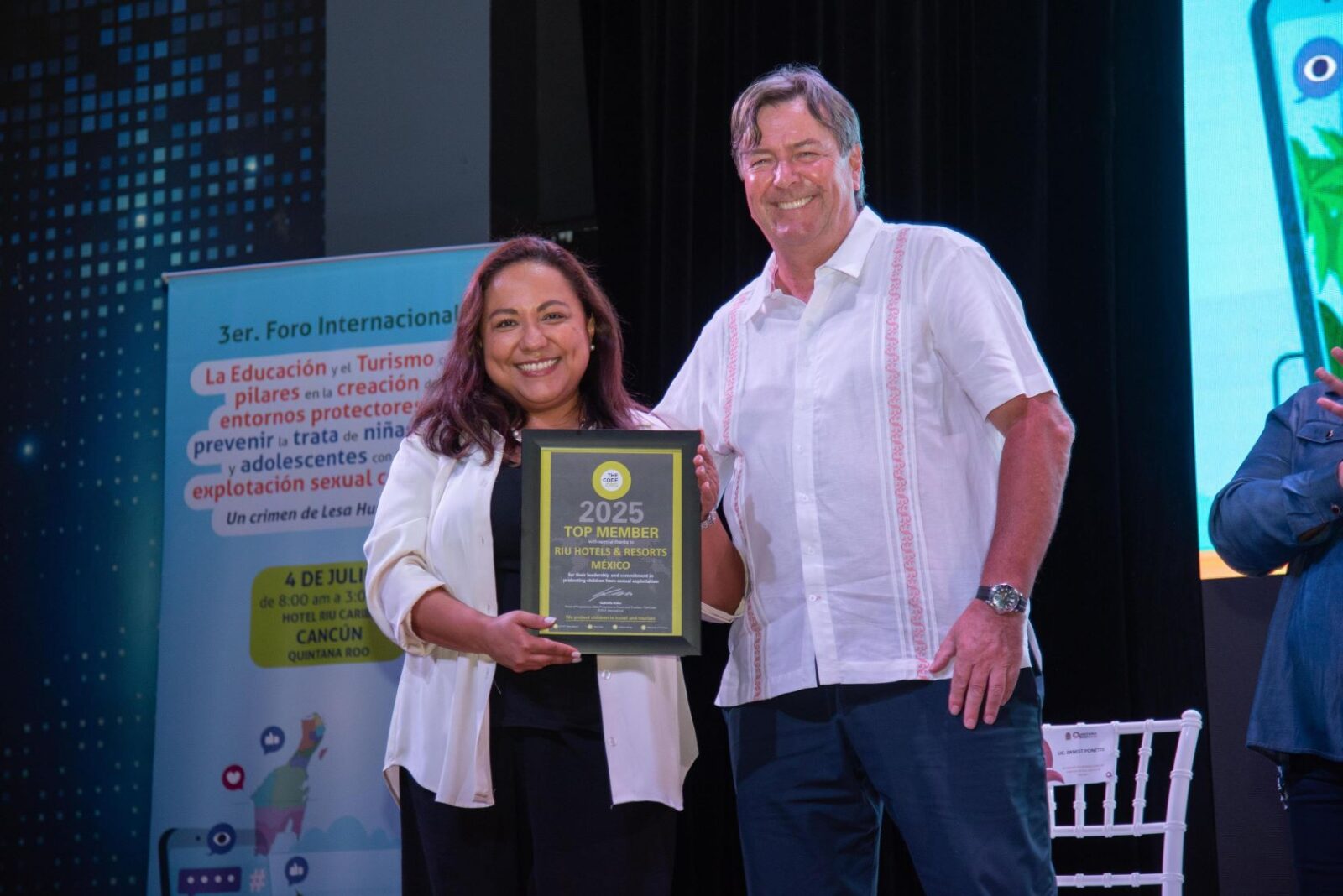
As proof of this commitment, RIU has been recognised as a Top Member of The Code. This distinction rewards the high degree of implementation of the code of conduct promoted by ECPAT (End Child Prostitution and Trafficking of Children for Sexual Purposes) to end commercial sexual exploitation in tourism.
Protocols and training: knowing what to do (and how)
‘Our hotels must become safe spaces, protected spaces, above all for children and adolescents’
Catalina Alemany, Director of Social Responsibility and Corporate Training at RIU
Within the Proudly Committed strategy, child protection is a priority line of action. In 2012, RIU signed The Code, the code of conduct promoted by ECPAT to end the commercial sexual exploitation of children and adolescents in tourism. Since then, at RIU we have worked to ensure our hotels are places where any potential risk situation towards a minor is detected and addressed in a clear and responsible manner.
This commitment is not limited to a document, but is translated into internal policies, operational protocols, and recurring training for the entire workforce.
‘Training turns concern into safe and coordinated action, and that is what makes the difference’
Selma Fernández, FAPMI-ECPAT Spain
Over more than 13 years, RIU has reviewed and improved its protocols to cover as many potential hotel situations as possible. The process can be summarised in three basic steps:
- Always verify the suspicion with a superior.
- Coordinate the response at a team level.
- If the situation requires it, management activates the authorities or social services.
Training is the central pillar. Every year, practical workshops are held in various destinations, with particular intensity in Spain and Mexico, where thousands of people have been trained—and tens of thousands globally—under the framework of The Code.
The Voice of the Team: Reception and Management
A hotel’s reception area concentrates many of the key ‘observation points’, but they are not the only ones: housekeeping, food and beverage, entertainment, security, and maintenance can also detect suspicious behaviour.
‘Tourism sector professionals are in a key position to detect warning signs because they have direct contact with families and with children and adolescents themselves.’
Patricia Moliné, Fundación RANA
For reception staff, the responsibility is felt very closely: they are the ones who see guests arrive, handle documentation, and can spot inconsistencies or strange situations. The workshops help them channel that responsibility, lean on the team, and trust that both the protocol and management will support any action taken in good faith.
Hotel management assumes a fundamental role when the protocol is activated: making delicate decisions, coordinating communication with social services or law enforcement, supporting the team, and maintaining composure in highly emotional situations. This shared responsibility between reception, all other departments, and management is what allows the system to work in practice.
Key Alliances: FAPMI-ECPAT and Fundación RANA
To address such a complex issue, RIU works with specialised entities that provide expertise, methodology, and a rigorous external perspective.
In Spain, RIU has consolidated internal policies and protocols accompanied by workshops and continuous awareness-raising, as well as zero-tolerance messages aimed at guests; in Mexico, the extensive rollout of training stands out, alongside the figures for personnel trained as recorded in The Code reports.
‘The collaboration between RIU and RANA is an example of a commitment that has been maintained over time: it has enabled the training of many teams, the updating of protocols, and the creation of a culture of zero tolerance.’
Patricia Moliné, Fundación RANA
Sector Impact and Next Steps for 2026
RIU has been recognised as a Top Member of The Code for its high degree of implementation of the code of conduct for child protection in travel and tourism.
‘There is a group of tourists who travel with the intention of abusing children and adolescents who no longer stay at RIU hotels, because RIU projects that image of a hotel that protects children.’
Catalina Alemany
This work has a knock-on effect across the sector: by sharing its experience at international conferences and meetings, RIU encourages other chains to develop their own policies, codes, and protocols. Looking ahead to 2026, RIU will expand its local ECPAT alliances to countries such as the Dominican Republic, the United States, and Costa Rica, in addition to tackling the challenge of opening a hotel in Thailand. The recommendations from expert entities involve weaving a local network of allies from the outset and adapting training to the specific risks and regulations of each destination.
Executive Summary and FAQ: RIU and ECPAT Alliance
What international recognition supports RIU’s work?
RIU has been distinguished as a Top Member of The Code. This is the ECPAT (End Child Prostitution and Trafficking of Children for Sexual Purposes) code of conduct designed to eradicate commercial sexual exploitation of children and adolescents in the tourism sector.
What is the strategic framework for this initiative?
Child protection is a priority line of action within the chain’s sustainability and responsibility strategy, known as Proudly Committed.
What does the operational protocol involve in the event of a suspicion?
The system is based on three steps for safe action: verify the suspicion with a superior, coordinate the response with the team and, if necessary, activate the authorities or social services.
Who receives training on these protocols?
The entire RIU workforce receives recurring training. Although reception is a key point, the departments of housekeeping, food and beverage, entertainment, security, and maintenance also participate.
Which strategic allies collaborate with RIU?
RIU works with expert entities such as FAPMI-ECPAT Spain and the RANA Foundation, who provide methodology and external auditing.
What are the expansion goals for 2026?
RIU will expand its local alliances with ECPAT in the Dominican Republic, the United States, and Costa Rica, in addition to implementing these protocols at its new opening in Thailand.
What deterrent impact does this policy have?
By projecting an image of a “hotel that protects children and adolescents“, it ensures that tourists who travel with the intention of abusing them stop staying at RIU establishments.